I have spent much of my career asking:
What happens when something reaches the end of its original purpose?
A building can become a source of materials. A discarded object can become a product. A pile of overlooked resources can become a business, a creative movement, or an entirely new local economy.
My work explores what happens between those moments: how policy, creativity, entrepreneurship, and practical systems can transform what we no longer need into something worth building with.
Current Research
From House to Harmony: Jimi Hendrix, Jane Jacobs, and the Alchemy of Architectural Salvage
What happens when a childhood home becomes culturally priceless but cannot be preserved?
I am currently teaming up with JOI Guitars, creators of the Harmonic Hendrix collection of guitars made from materials salvaged from Jimi Hendrix's childhood home. I am also writing a white paper based on this research for Architectural Salvage: Histories of Commerce and Guardianship, a 2027 conference at Ghent University.
My research follows the remarkable journey of Jimi Hendrix's childhood home from a modest Seattle bungalow to ten handcrafted guitars made from its salvaged materials.
When the house faced demolition, an unlikely guardian emerged: a real estate developer who recognized its cultural significance and spent years trying to save it. His plans for a museum ultimately failed, but historically significant materials from the house were preserved. He imagined that the wood might someday become guitars.
That possibility was realized by luthier Reuben Forsland of JOI Guitars. Working with Authentic Hendrix, Forsland transformed salvaged wood, nails, paint, and electrical wiring into ten limited edition instruments. The guitars became works of visual art, musical instruments, cultural artifacts, and commercial objects. A portion of the proceeds supported the Jimi Hendrix Memorial Park in Seattle.
Using Jane Jacobs's Systems of Survival, I explore how this unlikely chain of actors complicates the relationship between commerce and guardianship. The developer protected heritage. Hendrix's family guarded the musician's legacy. The luthier, artist, and engineer transformed architectural fragments into objects capable of carrying history forward through art and music.
I argue that artists, engineers, and craftspeople can become an “alchemical zipper,” connecting commerce and guardianship through the creative transformation of reclaimed materials.
From house to harmony, architectural salvage becomes heritage, art, commerce, and philanthropy.

Breaking it Down: A Comprehensive Guide to Building Deconstruction and Material Reuse Policy
Breaking It Down examines what happens when we choose to take buildings apart rather than simply destroy them.
Drawing on my experience in building deconstruction, material reuse, policy development, and Portland's Deconstruction Advisory Group, the book explores how local governments and communities can create practical policies that keep valuable building materials in use.
Part policy guide and part personal account, Breaking It Down follows the complicated work of turning an idea into a functioning system. Each chapter includes practical insights and a “The Shorthand” section with key points for quick reference.
It is written for policymakers, advocates, industry professionals, and anyone interested in building systems that make reuse easier, more practical, and more common.
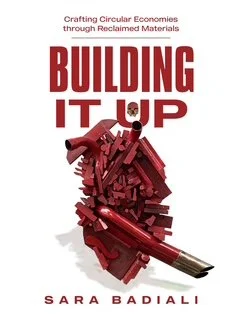
Building It Up: Crafting Circular Economies through Reclaimed Materials
The waste is ordinary; the execution is revolutionary.
What happens after we save the materials?
Building It Up explores how artists, makers, entrepreneurs, businesses, and communities can turn overlooked and inexpensive materials into products, jobs, local businesses, and new economic opportunities.
This is a book about creativity, but also organization. It looks at how individual ideas can grow into markets, how makers can become coordinated economic forces, and how successful local experiments can eventually become lasting systems and public policy.
Beginning with artists, reuse festivals, and local markets, the book follows the development of reuse economies from small scale experimentation to manufacturing, production, and broader economic development.
Along the way, it explores how material reuse can:
create jobs and support local businesses
provide opportunities for artists and entrepreneurs
revitalize underused spaces
keep wealth circulating locally
strengthen pride and connection within communities
turn successful local ideas into lasting policy
Each chapter combines real examples and case studies with practical policy pathways for helping similar ideas grow elsewhere.
Waste becomes a resource. Creativity becomes economic development. Community action becomes lasting change.
Current Fabrication:
Portland Porch Rocker - pictures to come.
Recent Collaborations:
I collaborated with Danny Salomon, founder of Second Story Builders, a Midcoast Maine-based business rooted in circular construction and "Radical Reuse."
Resources
A Guide to Deconstruction - Brad Guy 2003
Oregon's Building Code in reference to reclaimed wood in structures: 104.8.1 Used materials and equipment. Used materials, equipment and devices shall not be reused unless approved by the building official. Used or salvaged dimensional lumber shall be permitted to be used.
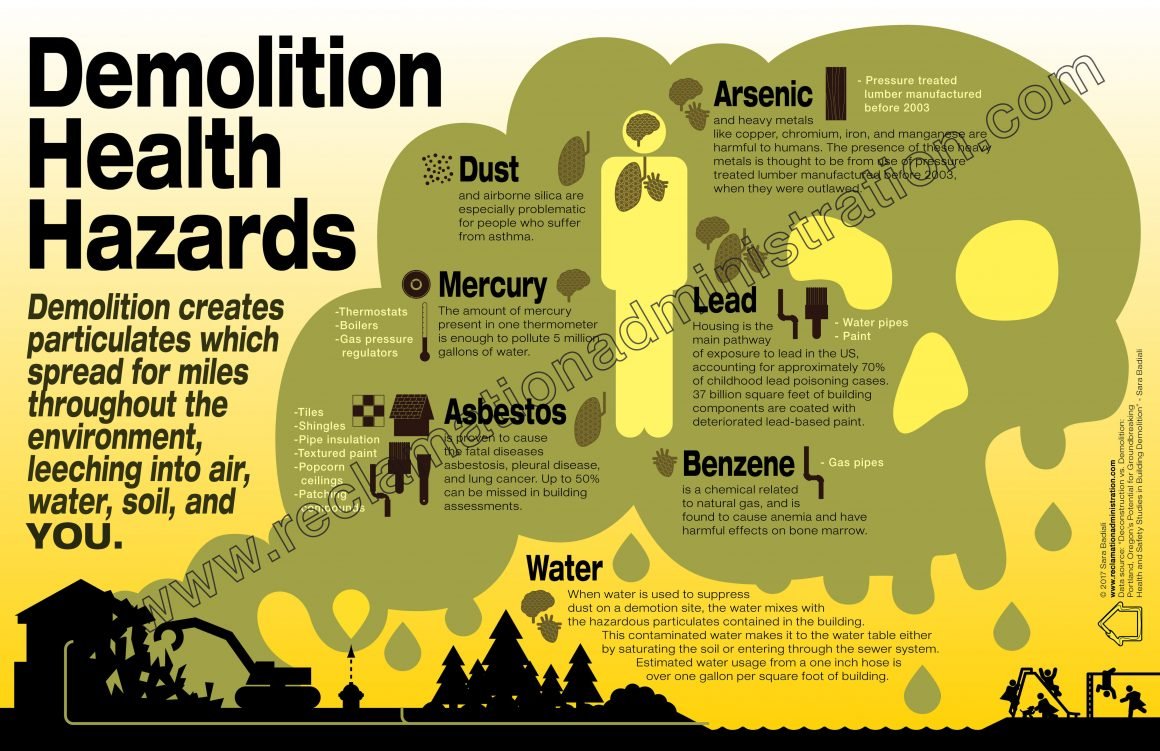
This infographic is a collaboration with artist Bruce Worden, and is based on Sara Badiali’s article Deconstruction vs. Demolition: Portland, Oregon’s Potential for Groundbreaking Health and Safety Studies in Building Demolition.
It is for sale for $55 please use the contact form to inquire.
Articles
Research & Report on: Per-and Polyfluoroalkyl Substances (PFAS) in Building Materials Sara Badiali Prepared for: King County, Washington February 2023
Deconstruction vs. Demolition: Portland, Oregon’s Potential for Groundbreaking Health and Safety Studies in Building Demolition Reclamation Administration: July 22, 2016
Reuse Centers Ways to Optomize Partnerships Reclamation Administration 2015
Drowning in Demolition Building Material Reuse Association: February 2014 Newsletter
Deconstruction is Policy Already Written Building Material Reuse Association: March 2014 Newsletter.
The Reclamation Administration Database is now archived. Please use the contact form for any inquiries.
In 2011, I founded the Reclamation Administration database, exclusively dedicated to building deconstruction and material reuse. For thirteen years, this resource was freely accessible to the public, serving thousands of individuals and organizations. During this time, I curated over four thousand news posts, research products, resource sheets, authored articles, and provided detailed reports and data. The Reclamation Administration played a pivotal role in advancing the building deconstruction and material reuse movement. It was utilized by numerous organizations, students, municipalities, and businesses to gain insights, write theses, formulate policies, and significantly reduce waste.
As one of the earliest resources on building deconstruction and material reuse, the Reclamation Administration has now transitioned to a new phase. In line with this evolution, I have authored the first comprehensive book on deconstruction policy, titled Breaking it Down: A Comprehensive Guide to Building Deconstruction and Material Reuse Policy. This book encapsulates my work with the Reclamation Administration and my advisory role in Portland, Oregon’s Building Deconstruction Ordinance.
Leveraging my extensive experience and expertise, I now offer consulting services to support initiatives focused on building deconstruction and material reuse. I am dedicated to helping others use these practices to foster positive environmental change.
Press
Deconstruction - Breaking it Down Salvo News 2024